Source Filter Pipe Wire Wheel Brush for Machinery and Furniture
Find 30 filter pipe wire wheel brush options for industrial cleaning and deburring. Compare stainless steel and carbon steel models with straight filaments for pipeline, furniture, and machinery applications; compare the available evidence and request quotations based on your requirements.
Key considerations
Products List




Comprehensive Sourcing Guide
Filter Pipe Wire Wheel Brush Sourcing Guide
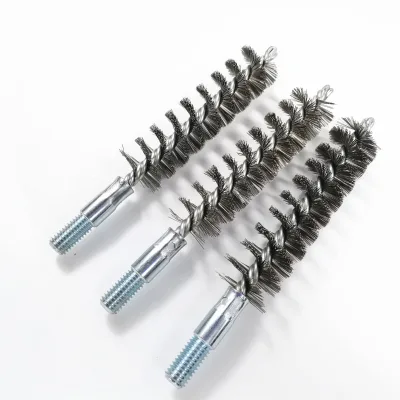
Procuring filter pipe wire wheel brushes requires a precise understanding of the specific industrial environments where these tools operate, particularly in pipeline cleaning and heavy machinery maintenance. Buyers must distinguish between general industrial brushes and specialized units designed for high-diameter pipe interiors, ensuring the selected product matches the exact operational diameter and flow requirements. The observed market data indicates a wide range of filament materials, including stainless steel, carbon steel, and abrasive wire, which directly influences the tool's ability to remove scale without damaging the pipe substrate.
Sourcing decisions should prioritize the structural integrity of the brush base and the durability of the filament attachment, as these components determine the service life under high-torque conditions. The available product models, such as the 43440 series and telescopic variants, suggest that customization is a critical factor for buyers with non-standard pipe geometries. It is essential to verify that the supplier can accommodate specific length and diameter requirements, as the standard offerings range from 12mm to 150mm in length and 150mm to 200mm in outside diameter, necessitating careful alignment with the physical constraints of the target pipeline system.
Product Scope and Observed Listing Signals
The current market listings for filter pipe wire wheel brushes reveal a diverse array of configurations, ranging from standard round bases to specialized oval and long-shaped designs tailored for specific cleaning tasks. Buyers should note that while many products are listed as new and ready for immediate shipment, the customization options allow for significant variation in filament shape and base material to suit unique industrial needs. The presence of both stainless steel and carbon steel filaments indicates that the scope covers applications from general deburring to aggressive polishing, requiring buyers to match the material hardness to the specific contaminants found in their pipelines.
Listing signals also highlight the importance of packing standards, with most suppliers utilizing standard export cartons or hard cardboard boxes to ensure safe transit of these precision tools. The observed product models, including the HX1021 and HX890 series, demonstrate that manufacturers offer distinct configurations for different applications, such as textile printing, environmental protection, and electrical electronics. Procurement teams must carefully review these model numbers to ensure compatibility with existing machinery, as the brush diameter and trim length specifications vary significantly across the catalog to accommodate different pipe sizes and cleaning intensities.
Technical Specifications to Verify
When evaluating technical specifications, the filament diameter and trim length are critical parameters that dictate the cleaning efficiency and the risk of pipe wall damage. The observed data specifies filament diameters around 0.50mm and trim lengths of 20mm, 30mm, or 45mm, which must be selected based on the thickness of the deposits and the tolerance of the pipe material. Buyers should verify that the brush height, typically around 20mm, aligns with the depth of the cleaning zone to ensure full coverage without causing excessive friction or heat buildup during operation.
The base material and shape are equally vital, with stainless steel round bases being the most common configuration for durability and corrosion resistance. Specifications such as the 15*270mm standard and telescopic models indicate that length and flexibility are key differentiators for accessing complex pipeline networks. Procurement teams must confirm the thread specifications, such as M6, M10, or M12, to ensure the brush can be securely mounted on the intended drive shafts or rods, preventing slippage or detachment during high-speed rotation in demanding industrial environments.
Compliance and Safety Documentation
Safety documentation for industrial wire wheel brushes often centers on the mechanical integrity of the rotating components and the potential for filament shedding under high stress. While specific certification standards are not universally listed in the provided data, buyers should request evidence of quality control processes that verify the tensile strength of the wire and the secure bonding of filaments to the base. This is particularly important for applications involving high-speed machinery where a failure could result in significant equipment damage or personnel injury.
Compliance also extends to the materials used in construction, ensuring that the steel or stainless steel components meet industry expectations for durability and chemical resistance. Buyers should verify that the supplier adheres to standard export practices and provides clear documentation regarding the origin of the materials, especially when the brushes are used in sensitive environments like food processing or pharmaceutical manufacturing. Although specific safety ratings are not explicitly detailed in the listings, the emphasis on "New" condition and "Customized" manufacturing suggests a focus on meeting rigorous performance benchmarks for industrial safety.
Cost Drivers and Commercial Terms
The cost of filter pipe wire wheel brushes is heavily influenced by the choice of filament material, with stainless steel and abrasive wire typically commanding higher prices than standard carbon steel options. The observed price range of 0.1 to 99.99 USD reflects the variability in size, complexity, and customization level, meaning that buyers must balance budget constraints with the need for long-term durability in harsh operating conditions. Customization fees may apply for non-standard dimensions or specialized filament shapes, adding to the base cost but potentially reducing long-term replacement frequency.
Commercial terms such as Minimum Order Quantity (MOQ) and lead times are significant factors in the procurement strategy, with observed MOQs ranging from 1 to 4500 units depending on the supplier and product complexity. Buyers should negotiate terms that accommodate their production schedules, as the lead time for customized orders may exceed that of standard stock items. Understanding the packing requirements, such as standard export cartons versus hard cardboard boxes, is also essential for calculating total landed costs, including shipping and handling fees for these industrial tools.
Supplier Qualification and Quality Control
Supplier qualification for industrial brushes requires a thorough assessment of their manufacturing capabilities, particularly their ability to handle custom orders for specific filament shapes and base materials. Buyers should verify that the supplier has a proven track record in producing wire brushes for diverse applications, including pipeline cleaning, wooden furniture, and machinery maintenance, as indicated by the broad range of product models and specifications available. The presence of OEM/ODM acceptance suggests that capable suppliers can adapt their production lines to meet unique client requirements, ensuring a tailored solution for specific industrial challenges.
Quality control processes must be robust enough to guarantee consistency in filament attachment and base integrity, as these are the primary points of failure in wire wheel brushes. Buyers should request samples to test the brush performance under actual operating conditions, focusing on the uniformity of the spiral pattern and the resistance to wear. The observation that products are listed as "New" and "Customized" implies a focus on fresh manufacturing, but independent verification of the production standards and the supplier's adherence to their own quality protocols is necessary to ensure reliable performance in the field.
Long-Term Procurement Checks
Establishing a long-term procurement relationship for filter pipe wire wheel brushes involves regular performance reviews to ensure the tools continue to meet operational efficiency standards over time. Buyers should monitor the wear rates of the filaments and the structural integrity of the bases to identify any degradation in quality that might indicate a need for supplier adjustment or product redesign. Consistent performance in cleaning pipelines and machinery is a key metric, and any deviation from expected results should trigger a review of the supplier's manufacturing processes and material sourcing.
Continuous communication with the supplier regarding updates in filament technology and base material improvements can help maintain a competitive edge in industrial cleaning operations. As the market evolves, suppliers may introduce new models or specifications that offer enhanced durability or efficiency, making it essential for buyers to stay informed about these developments. Regular audits of the supplier's ability to meet delivery schedules and maintain the required customization levels will ensure a stable supply chain and minimize disruptions in critical industrial maintenance schedules.
FAQs
What materials are used for the filament and base?
The filament is made of stainless steel, carbon steel, or abrasive wire, while the base is constructed from stainless steel. Some variants also utilize nylon or steel wire for specific cleaning applications. This ensures durability and effectiveness for industrial polishing and deburring tasks.
Which brush shapes and sizes are available for purchase?
Available shapes include round, oval, and long configurations with lengths ranging from 12mm to 150mm. The outside diameter options are 150mm, 160mm, or 200mm, and the brush height is typically 20mm. These dimensions support various pipeline cleaning and machinery maintenance requirements.
Can I request custom specifications for these industrial brushes?
Yes, customization is available for filament material, base shape, and specific dimensions like trim length. The product models support OEM and ODM services to meet unique industrial needs. Buyers can specify requirements for textile printing, furniture, or environmental protection applications.
How are these wire brushes packaged for export?
Products are packed in standard export cartons, hard cardboard boxes, or general cartons depending on the specific model. This packaging ensures safe transport and protection during shipping. The standard export carton is commonly used for bulk industrial orders originating from China.
What are the primary applications for these wire brushes?
These brushes are designed for cleaning pipelines, polishing, and deburring in machinery, wooden furniture, and electrical electronics. They are also suitable for textile printing, dying, and environmental protection tasks. The function covers both industrial and civil brush applications effectively.
Which thread types and technical features do the brushes have?
The brushes feature single spiral technical designs with thread options including M6, M10, M12, or rod types. The handle material is steel, and the total length is 200mm for telescopic models. These features ensure secure attachment and efficient operation in various industrial settings.